
Poster — The Star That Refused to Fade | Design © Dhinakar Rajaram, 2025 | Part of the Bibliothèque Series
The Star That Refused to Fade — Bibha Chowdhuri and the Lost Light of Discovery
Préface — This entry belongs to the Bibliothèque — a living archive of science, memory, and meaning. Each chronicle blends scientific rigour with historical justice and literary grace, reclaiming the overlooked stories of discovery. Here, we honour Bibha Chowdhuri (1913–1991) — India’s first woman high-energy physicist, who glimpsed the pion long before the world applauded it.
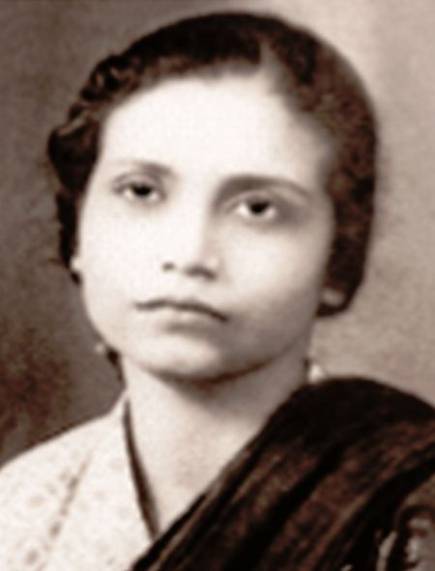
Some discoveries shine quietly before the world notices. Bibha Chowdhuri glimpsed the subatomic frontier years before it was crowned with the Nobel — and the cosmos has since restored her name among the stars.
I. Early Life and Academic Foundations
Born in 1913 in Kolkata, Bibha Chowdhuri grew up in an era when few Indian women even entered laboratories. She earned her M.Sc. in Physics from the University of Calcutta in 1936 and soon joined the Bose Institute under Professor D. M. Bose, a pioneer of Indian physics. In those hallowed halls of early experimental science, she began her journey into the realm of cosmic rays.
II. The Cosmic-Ray Experiments
In the late 1930s, Chowdhuri and Bose undertook experiments using photographic nuclear-emulsion plates — fragile films sensitive enough to record charged particle tracks. These were exposed to cosmic radiation in the Himalayas and Darjeeling, where thinner atmosphere allowed clearer traces. Among the patterns, Bibha identified particles heavier than electrons but lighter than protons — what we now call pions.
These findings predated by nearly six years the 1947 Nobel-winning discovery of the pion by Cecil Powell and his colleagues in Bristol. But her work, scattered under various spellings — Biva Choudhuri, B. Chaudhury, Bibha Chowdhuri — was lost in translation, quite literally.
III. The Pion — Nature, Function, and Legacy
Pions (π-mesons) are the lightest mesons, composed of a quark and an antiquark. They mediate the strong nuclear force — the invisible glue holding protons and neutrons within atomic nuclei. There are three types: π⁺, π⁻, and π⁰. Charged pions decay into muons and muon-neutrinos within about 26 nanoseconds; neutral pions decay almost instantly into two gamma-ray photons. Their existence validates one of the most elegant theories in physics — quantum chromodynamics (QCD).
Neutrino vs. Pion — Two Cosmic Messengers
| Property | Neutrino | Pion |
|---|---|---|
| Particle Type | Lepton | Meson (quark + antiquark) |
| Charge | Neutral | π⁺, π⁻, π⁰ |
| Forces Involved | Weak, gravitational | Strong, electromagnetic, weak (if charged) |
| Mean Lifetime | Effectively stable | π⁺/π⁻ ≈ 26 ns; π⁰ ≈ 8.5×10⁻¹⁷ s |
| Detectability | Extremely weak; requires large detectors | Tracks visible in emulsion plates or detectors |
The difference is profound: neutrinos are ghostly and barely interact; pions are vivid and short-lived, yet traceable. Bibha’s early identification of pion tracks, captured on emulsion, was akin to photographing lightning during a storm with a handmade lens — improbable and brilliant.
IV. A Woman of Firsts
In 1944, she earned her Ph.D. in Physics from the University of Calcutta, becoming India’s first female particle physicist. Her thesis, “Extensive Studies of Cosmic Showers with Nuclear Emulsions,” remains a landmark in early Indian cosmic-ray research. Later, she worked under Patrick M. S. Blackett at Manchester University and subsequently joined TIFR and BARC, contributing to particle studies until her retirement in the late 1970s.
V. Modern Relevance of Pion Physics
- Nuclear Physics: Virtual pion exchange explains how atomic nuclei bind.
- Astrophysics: Pions formed in cosmic-ray collisions create gamma-ray signatures in supernova remnants.
- Neutrino Astronomy: Pion decay produces muon-neutrinos — essential for studying high-energy cosmic events.
- Quantum Chromodynamics: Pions are central to understanding quark confinement and chiral symmetry breaking.
- Medical Physics: Pion beams were historically studied in cancer therapy due to their controlled energy deposition.
VI. Timeline of Her Career and Legacy
| Year | Event |
|---|---|
| 1913 | Born in Kolkata, India |
| 1936 | M.Sc. in Physics, University of Calcutta |
| 1939–41 | Published cosmic-ray studies with D. M. Bose — observed pion-like tracks |
| 1944 | Ph.D., University of Calcutta |
| 1945–47 | Postdoctoral research under P. M. S. Blackett, Manchester University |
| 1950s–70s | Researcher at TIFR and BARC, Mumbai — cosmic rays and particle interactions |
| 1991 | Passed away in relative obscurity |
| 2019 | Star in Sextans named Bibhā; exoplanet named Santamasa |
VII. Glossary
Meson: A particle composed of one quark and one antiquark; mediates the strong force.
Pion (π-meson): Lightest meson; mediates the residual strong interaction in nuclei.
Neutrino: Electrically neutral, nearly massless lepton interacting via the weak force.
Cosmic Ray: High-energy atomic particle from space striking Earth's atmosphere.
Nuclear Emulsion Plate: Photographic film sensitive to charged particles, used to detect subatomic tracks.
VIII. Coda
Bibha Chowdhuri’s story is more than a chronicle of forgotten genius; it is a reminder that history itself needs calibration. Recognition, like starlight, may take centuries — but it arrives nonetheless. Today, her name glows in Sextans, and her work resonates in every accelerator that still traces pions, every observatory decoding cosmic rays.
IX. Epilogue — On Memory, Particles, and Light
Particles perish; light endures. Bibha’s life, once invisible in the ledgers of science, now radiates through archives, classrooms, and celestial maps. She turned emulsion plates into mirrors of the cosmos — and in doing so, wrote her name across time. The universe, it seems, keeps the best receipts.
X. References & Further Reading
- Wikipedia: Bibha Chowdhuri
- SD2: A Woman of Firsts
- TIFR Archive: Roy & Singh (2021)
- The Telegraph India: The Woman Who Could Have Won a Nobel
- CTA Observatory: Building from Diversity
- Wellesley College Mirror Blog
- Down To Earth — Celebrating a Forgotten Life
- Asia Research News — Bibha Chowdhuri
© Dhinakar Rajaram, 2025.
All rights reserved. This article and design are original works by the author as part of the Bibliothèque Series.
Reproduction, redistribution, or adaptation in any form requires prior written consent of the author.
Image Credit: Wikimedia Commons (Bibha Chowdhuri portrait, public domain).
Research Sources: TIFR, BARC, Asia Research News, The Telegraph India, and others cited above.
Preserving the forgotten and the luminous alike.
Hashtags:
#BibhaChowdhuri #WomenInScience #IndianPhysics #HiddenFigures #PionDiscovery #ParticlePhysics #ScienceHistory #BibhāStar #Bibliotheque #CosmicRays #IndianScientists #ForgottenGenius #Astrophysics #WomenOfIndia
© Dhinakar Rajaram | The Bibliothèque Series — Science, Memory & Meaning


No comments:
Post a Comment